
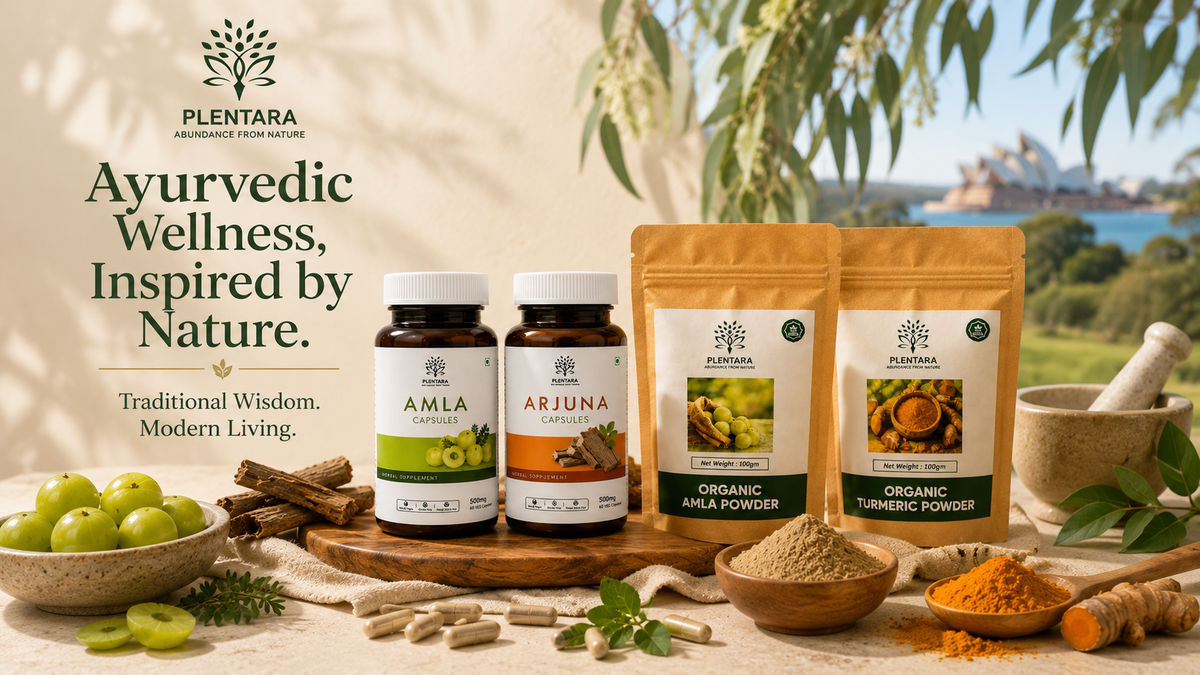
Why Are Australians Exploring Ayurvedic Supplements for Wellness?
Interest in Ayurvedic supplements in Australia is growing as more people explore traditional herbs, plant-based ingredients and holistic approaches to everyday wellness. From familiar botanicals such as amla and turmeric to convenient capsule formats, Ayurveda offers a long-standing tradition of working with herbs as part of a broader approach to wellbeing.
But what exactly are Ayurvedic supplements, why are Australians interested in them, and what should you consider when choosing these products?
In this guide, we'll explore the growing interest in Ayurvedic wellness, commonly encountered Ayurvedic herbs, the convenience of capsule formats, and some practical considerations for Australian shoppers.
What Are Ayurvedic Supplements?
Ayurvedic supplements are products based on ingredients and traditions associated with Ayurveda, a traditional system of Indian wellness with a history spanning thousands of years.
Ayurvedic products may contain herbs, botanical ingredients or other traditionally used substances and can be available in a variety of formats, including capsules, powders, teas and oils.
For many people, the appeal of Ayurveda lies in its holistic approach and long history of working with botanical ingredients. Modern product formats can also make traditionally familiar herbs easier to incorporate into an everyday wellness routine.
However, Ayurvedic products can vary considerably in their ingredients, formulation and intended use. When choosing an Ayurvedic supplement, always read the product label carefully and follow the manufacturer's directions.
Why Is Ayurveda Gaining Interest in Australia?
Australia has seen growing interest in natural, plant-based and traditional approaches to wellbeing. Ayurveda fits within this broader wellness landscape through its long-standing connection with herbs, botanicals, lifestyle practices and holistic traditions.
For some consumers, exploring Ayurveda is not necessarily about replacing one particular product with another. Instead, it can be an opportunity to discover traditional approaches and learn more about botanical ingredients as part of an everyday wellness routine.
The availability of Ayurvedic products online has also made it easier for Australian consumers to research individual ingredients, compare different formulations and learn about traditional practices before making a purchasing decision.
A Growing Interest in Natural and Plant-Based Ingredients
One reason Ayurvedic products attract attention is their connection with botanical and plant-based ingredients.
Many Ayurvedic herbs have been used traditionally for generations and are now familiar names within the broader natural wellness space.
Ingredients such as amla, turmeric, tulsi, brahmi and ashwagandha are commonly encountered in Ayurvedic and herbal products. Depending on the product, these ingredients may be available in different forms, including powders, capsules and other preparations.
When choosing a natural wellness product, it is important to look beyond the ingredient name. Check the complete ingredient list, recommended directions, product information and any relevant warnings provided on the label.
Popular Ayurvedic Herbs Australians Are Exploring
Ayurveda has a rich tradition of using botanical ingredients. Some herbs have become particularly familiar to consumers interested in Ayurvedic and natural wellness products.
Amla
Amla, also known as Indian gooseberry, is a well-known botanical associated with Ayurveda.
It is commonly encountered in Ayurvedic products in forms such as powders, capsules and other herbal preparations. Amla has a long history of traditional use and remains a popular ingredient among people exploring Indian herbal traditions.
When purchasing an amla product, check the formulation and product directions to understand exactly what the product contains and how it is intended to be used.
Ashwagandha
Ashwagandha is another widely recognised Ayurvedic herb. Its traditional use originates from Ayurveda, and the ingredient has become increasingly familiar within the modern natural wellness conversation.
Consumers interested in ashwagandha should check the specific product formulation, ingredient information and recommended directions rather than assuming that all products containing the herb are identical.
Brahmi
Brahmi is traditionally associated with Ayurveda and is commonly found in herbal preparations.
It is available in different forms, including powders and capsules, making it accessible to consumers interested in incorporating traditional Ayurvedic botanicals into their wellness routines.
As with any herbal product, consumers should review the specific formulation and follow the directions supplied with the product.
Turmeric
Turmeric is one of the most recognisable Indian botanicals and has a long history of culinary and traditional use.
Its distinctive golden colour and botanical heritage have also made turmeric a familiar ingredient in natural wellness products.
Because turmeric products can differ in formulation and concentration, consumers should check the product label and follow the manufacturer's directions.
Tulsi
Tulsi, also known as holy basil, is traditionally valued within Ayurveda and remains an important botanical in Indian wellness traditions.
Its continued presence in modern herbal products reflects broader consumer interest in traditional plant-based ingredients and natural wellness practices.
Why Are Ayurvedic Capsules Becoming Popular?
Ayurvedic capsules offer a convenient format for incorporating certain herbal ingredients into a daily routine.
Unlike powders, which may need to be measured or mixed, capsules can be easier to store, carry and use while travelling or away from home.
For Australian consumers with busy routines, this convenience can make capsule-based products an appealing format. Capsules also provide a straightforward way to use products where the manufacturer has specifically formulated the ingredients in capsule form.
However, convenience should not replace careful product selection.
Before purchasing an Ayurvedic capsule, check:
- The complete ingredient list
- Recommended directions
- Serving or dosage information where applicable
- Product quantity
- Storage instructions
- Relevant warnings or precautions
- Manufacturer or supplier information
Taking a few moments to understand the product can help you make a more informed choice.
What Should You Look for When Buying Ayurvedic Supplements in Australia?
Choosing an Ayurvedic supplement involves more than looking for a familiar herb or a natural-sounding product name.
Product information, transparency and appropriate directions all matter.
Check the Ingredients
Look for a clearly presented ingredient list and make sure you understand what the product contains.
If you're specifically looking for an Ayurvedic herb such as amla, brahmi, arjuna or haritaki, check that the ingredient is clearly identified on the product information rather than relying only on the product name.
Read the Directions
Follow the manufacturer's recommended directions and pay attention to any warnings, storage instructions or other information supplied with the product.
Avoid assuming that products containing the same herb should automatically be used in the same way.
Consider Product Quality and Sourcing
Transparent information about ingredients, manufacturing and sourcing can help consumers make more informed purchasing decisions.
Look for retailers that provide clear product descriptions and accessible information about what they sell.
Understand Australian Requirements
Products sold in Australia may be subject to different regulatory requirements depending on their ingredients, formulation, intended purpose and how they are classified and marketed.
Consumers should therefore avoid assuming that a product described as "natural" or "Ayurvedic" is automatically suitable for every person or situation.
Always review the product information and seek appropriate professional advice when you have questions about whether a particular product is right for you.
Ayurvedic Supplements and Everyday Wellness
Exploring Ayurveda does not have to mean completely changing your lifestyle.
For many people, learning about traditional herbs and incorporating suitable products into an existing routine can simply be another way to engage with natural wellness traditions.
Whether you're exploring Ayurvedic capsules, herbal powders or botanical products, a useful starting point is understanding what you're buying, why you're considering it and how the product is intended to be used.
A thoughtful wellness routine can begin with something as simple as learning more about the ingredients you encounter and making informed choices based on reliable product information.
Choosing Between Capsules and Herbal Powders
Ayurvedic herbs are available in several formats, with capsules and powders being two common options.
Ayurvedic Capsules
Capsules are generally convenient, portable and straightforward to incorporate into a daily routine.
They can be particularly practical for people who travel frequently or prefer not to measure or mix powdered ingredients.
Ayurvedic Powders
Herbal powders offer a more traditional preparation format and can provide flexibility depending on how the particular product is intended to be used.
Some consumers prefer powders because they can be incorporated into appropriate food or beverage preparations when the product directions allow it.
Which Format Is Right for You?
There isn't one format that is automatically best for everyone.
The right choice depends on the specific product, its intended use, the ingredient formulation and your personal preferences.
Always follow the instructions supplied with the individual product.
Exploring Ayurvedic Wellness Responsibly
Interest in Ayurveda can be an opportunity to learn about traditional Indian botanical knowledge while approaching modern wellness choices thoughtfully.
When exploring Ayurvedic supplements in Australia, consider the product as a whole rather than focusing on a single ingredient or marketing claim.
Look at:
- Ingredients
- Product format
- Directions
- Product information
- Storage requirements
- Warnings and precautions
- Supplier transparency
A well-informed approach allows you to explore traditional wellness products while making purchasing decisions based on clear and relevant information.
Frequently Asked Questions
What are Ayurvedic supplements?
Ayurvedic supplements are products based on ingredients and traditions associated with Ayurveda. They can be available in formats such as capsules, powders and other herbal preparations.
What Ayurvedic herbs are commonly used?
Commonly encountered Ayurvedic herbs include amla, ashwagandha, brahmi, turmeric, tulsi, arjuna and haritaki. Individual products can differ in their formulation, ingredients and intended use.
Are Ayurvedic supplements available in Australia?
Yes, Ayurvedic and herbal products are available through Australian retailers and online stores. Consumers should check product information, ingredients and applicable directions before purchasing.
Why choose Ayurvedic capsules?
Capsules can offer a convenient, portable format for products containing herbal ingredients. They can be easier to store and incorporate into a daily routine than some powdered preparations.
What should I check before buying an Ayurvedic supplement?
Check the complete ingredient list, recommended directions, product information, warnings and storage instructions. It is also useful to consider the transparency of the retailer and manufacturer.
Are Ayurvedic supplements suitable for everyone?
Not necessarily. Individual products differ, and suitability can depend on the ingredients and the individual. Read the product information carefully and seek appropriate professional advice when needed.
What is the difference between Ayurvedic capsules and powders?
Capsules provide a convenient, pre-formulated format, while powders offer a different preparation format that may be used according to the specific product directions. Neither format is automatically better for everyone.
Final Thoughts
The growing interest in Ayurvedic supplements in Australia reflects broader curiosity about traditional herbal knowledge, botanical ingredients and holistic approaches to everyday wellness.
From familiar herbs such as amla, turmeric, brahmi and ashwagandha to convenient capsule formats, Ayurveda offers consumers an opportunity to explore a rich and long-standing wellness tradition.
If you're considering an Ayurvedic product, take the time to read the label, understand the ingredients and follow the manufacturer's directions.
Choosing products with clear information and transparent presentation can help make your exploration of Ayurvedic wellness more informed and considered.
Explore Plentara's range of Ayurvedic and natural wellness products to discover products inspired by traditional botanical knowledge and presented for modern everyday routines. 🌿