
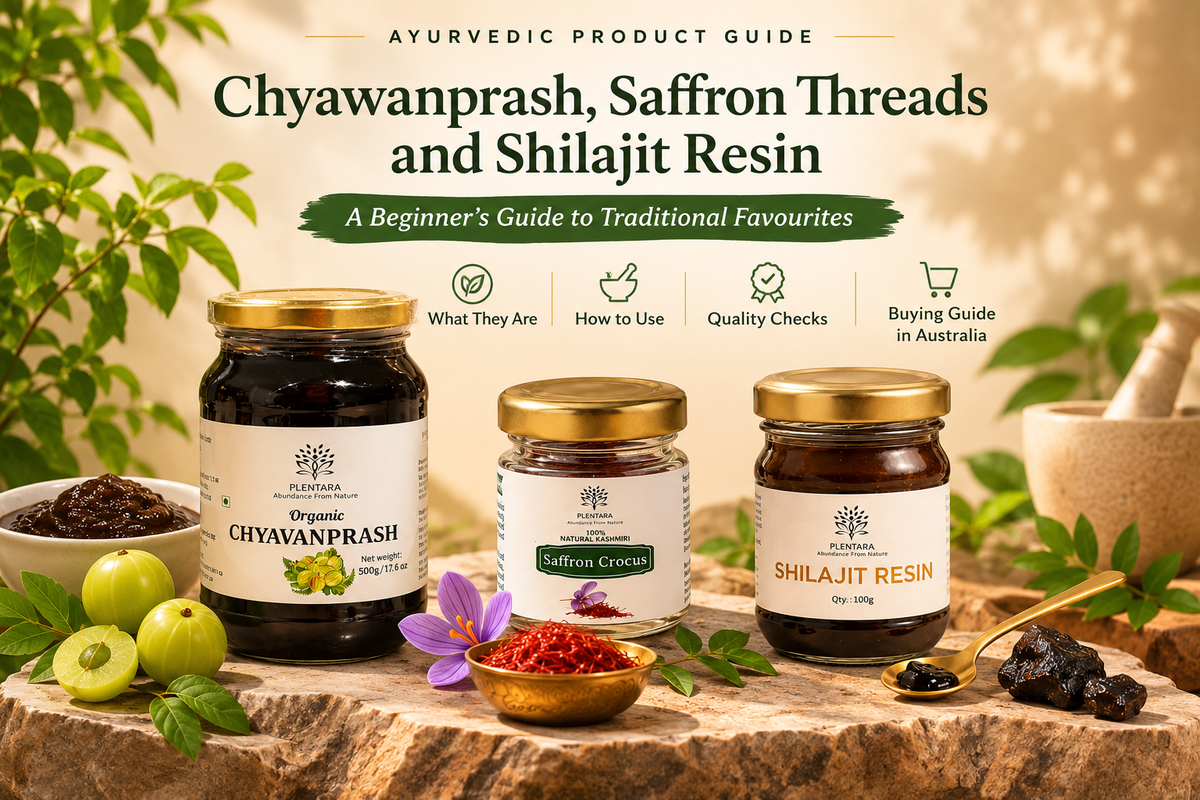
A Beginner’s Guide to Chyawanprash, Saffron Threads and Shilajit Resin
Discover three very different products rooted in traditional use, from a classic Ayurvedic preparation to a prized culinary spice and a naturally occurring resin. Learn what distinguishes them and what to consider before buying in Australia.
Explore the differencesTraditional Indian food and wellness practices feature a wide variety of ingredients and preparations. Some are enjoyed for their flavour and place in cooking, while others are associated with long-standing traditional systems. Understanding the identity, intended use, ingredients and quality information of each product is an important first step before making a purchase.
In this guide, we explore Chyawanprash, saffron threads and Shilajit resin. Although they are sometimes grouped together in conversations about traditional products, they are not interchangeable. Each has its own characteristics, storage considerations and questions worth asking as a shopper.
1. What Is Chyawanprash?
Chyawanprash is a traditional Ayurvedic preparation commonly presented as a thick, spoonable paste. Recipes can contain a range of botanical ingredients, with amla often associated with traditional formulations. The exact ingredients, proportions and preparation methods vary between products, so it is important to check the label rather than assume that every jar contains the same formula.
Its distinctive taste may be sweet, tangy, spiced or herbal, depending on the recipe. Texture and colour can also vary. These characteristics are part of what makes checking the actual product information more useful than relying on the name alone.
What should you check when buying Chyawanprash?
- Ingredients: review the full ingredient list and check for ingredients you need to avoid.
- Product details: look for the net quantity, storage requirements and best-before information.
- Directions: follow the instructions provided on the product label rather than assuming that all formulations are used in the same way.
- Dietary suitability: check the label for sugars, allergens and other ingredients relevant to your needs.
- Product claims: be cautious of promises that suggest guaranteed results or that a product can replace professional medical advice.
2. What Are Saffron Threads?
Saffron is a prized culinary spice made from the dried red stigmas of the Crocus sativus flower. Its delicate threads are known for their distinctive aroma, subtle flavour and ability to add a rich golden hue to food. Saffron is used in a variety of cuisines, including rice dishes, desserts, sauces and warm drinks.
Because saffron is harvested in small quantities from each flower, it is often sold in relatively small packages. A little can contribute noticeable colour and aroma to a recipe, which makes careful handling and storage worthwhile.
How can you use saffron threads?
- Infuse before adding: steep a few threads in a small amount of warm water or milk, following your recipe, to release colour and aroma.
- Add to rice dishes: use the infusion in dishes such as pilaf or biryani for a distinctive aroma and colour.
- Try desserts: saffron can complement rice pudding, custards and other sweet recipes.
- Experiment with warm drinks: a small saffron infusion can add a fragrant note to milk-based drinks.
How do you assess and store saffron?
Look for clear product information, intact threads, appropriate packaging and details about origin where these are provided and verified. Colour alone is not a reliable guarantee of authenticity or grade. Aroma, appearance and packaging can offer useful clues, but they do not replace reliable sourcing and product documentation.
Store saffron in a tightly sealed container in a cool, dry place away from direct sunlight, heat and moisture. Follow any additional storage instructions supplied with the product.
For more saffron information, you can also read our existing guide: Can Saffron Threads Boost Your Lifestyle & Nutrition?. Use it alongside recipe ideas and product details to explore the culinary side of this spice.
3. What Is Shilajit Resin?
Shilajit is a naturally occurring, dark, resin-like substance associated with mountainous regions and used in some traditional systems. Commercial products may be sold in resin, powder or capsule forms. Their composition and processing can differ, so the name and appearance alone are not enough to establish a product's purity, contents or suitability.
Shilajit deserves particular care when researching products. Reliable information about sourcing, processing, composition and independent quality testing is more useful than broad promises about energy, performance or other health outcomes.
What should you check before buying Shilajit resin?
- Source and processing: look for clear information about where the material comes from and how it is prepared.
- Testing: seek credible, product-specific testing documentation from a competent independent laboratory. Ask what was tested, when it was tested and whether the report corresponds to the product being sold.
- Contaminants: consider whether testing covers relevant heavy metals and other contaminants. A dark colour or resin texture does not demonstrate safety.
- Composition: check the stated ingredients and any additives, along with the net quantity.
- Directions and cautions: follow the label. If you are pregnant or breastfeeding, take medication, have a medical condition or are unsure whether the product is appropriate for you, seek advice from a qualified healthcare professional.
- Australian requirements: check the product's regulatory status and the claims legally permitted for it in Australia.
Chyawanprash vs Saffron vs Shilajit Resin: What Is the Difference?
The easiest way to understand these products is to compare their form, common context and the information worth checking before purchase.
| Product | What It Is | Common Context | What to Check |
|---|---|---|---|
| Chyawanprash | A traditional Ayurvedic preparation, often sold as a thick paste. | Traditional preparation with a recipe that varies by product. | Ingredients, allergens, nutrition information, directions and storage. |
| Saffron Threads | Dried stigmas of the Crocus sativus flower. | Culinary use in rice, desserts and fragrant drinks. | Product identity, sourcing information, packaging and storage. |
| Shilajit Resin | A resin-like substance sold in different processed product forms. | Traditional use; product-specific quality and safety checks are important. | Source, composition, independent contaminant testing, directions and regulatory status. |
These products have different characteristics and are not substitutes for one another. Your decision should be based on the product's intended use, accurate product information and your own requirements, rather than assuming that all traditional products offer the same benefits.
How to Choose Traditional Products in Australia
Whether you are buying Chyawanprash, a culinary spice or a resin-based product, a few careful checks can help you make a more informed choice.
- Read the complete label. Check the product name, ingredients, net quantity, directions and storage information.
- Look for transparent sourcing. Prefer clear, specific information over vague statements about origin or quality.
- Ask for relevant evidence. For products where purity is a concern, seek documentation that matches the actual product and batch.
- Understand the product category. Food, complementary medicines and other goods can be subject to different requirements in Australia.
- Be sceptical of guaranteed results. Claims about preventing or treating disease, or delivering guaranteed health outcomes, deserve particular scrutiny.
- Follow the product's directions. Do not infer an appropriate amount or method of use from another brand's product.
For further information, consult the Australian Therapeutic Goods Administration's advertising guidance. Product-specific regulatory requirements depend on the product's classification, ingredients, intended use and claims.
Frequently Asked Questions
What is Chyawanprash traditionally made from?
Chyawanprash is a traditional Ayurvedic preparation that may contain amla and a blend of other botanical ingredients. Formulas vary, so check the ingredient list for the specific product rather than assuming every preparation is the same.
How do you use saffron threads in cooking?
Saffron threads can be infused in a small amount of warm water or milk before being added to recipes. They are used in dishes such as rice preparations, desserts and fragrant drinks. Follow the recipe and store unused threads in a sealed container away from heat and moisture.
How should saffron threads be stored?
Keep saffron in a tightly sealed container in a cool, dry and dark place. Protect it from moisture, heat and direct sunlight, and follow the storage guidance on the package.
What is the difference between Shilajit resin and capsules?
They are different product formats. Resin is typically presented as a sticky or solidified substance, while capsules contain material in a capsule format. Processing, composition and quality can vary by product, so compare the actual ingredient information and testing documentation rather than relying on format alone.
How can I assess the quality of Shilajit resin?
Look for transparent sourcing and processing information, a clear ingredient statement and credible independent testing relevant to contaminants such as heavy metals. A product's appearance, texture or marketing language cannot independently establish its purity or safety.
Can everyone use these products?
No single product should be assumed suitable for everyone. Ingredients, allergies, medical conditions, medications, pregnancy and breastfeeding can affect whether a product is appropriate. Read the label and seek advice from a qualified healthcare professional when uncertain.
Explore Traditional Products with Plentara
Learning about an ingredient is a useful first step towards choosing a product thoughtfully. Review the ingredients, product-specific details and directions for the item you are considering, and look for clear information that helps you decide with confidence.
Discover the Plentara Collection
Explore Chyawanprash, Saffron Threads and Shilajit Resin through their individual product listings and review the information available for each.
Organic Chyawanprash Saffron Threads Shilajit ResinImportant information: This article provides general product and ingredient information, not individual medical advice. Traditional use does not establish clinical effectiveness or guarantee safety. Always review the actual product label and consult a qualified healthcare professional when appropriate.