
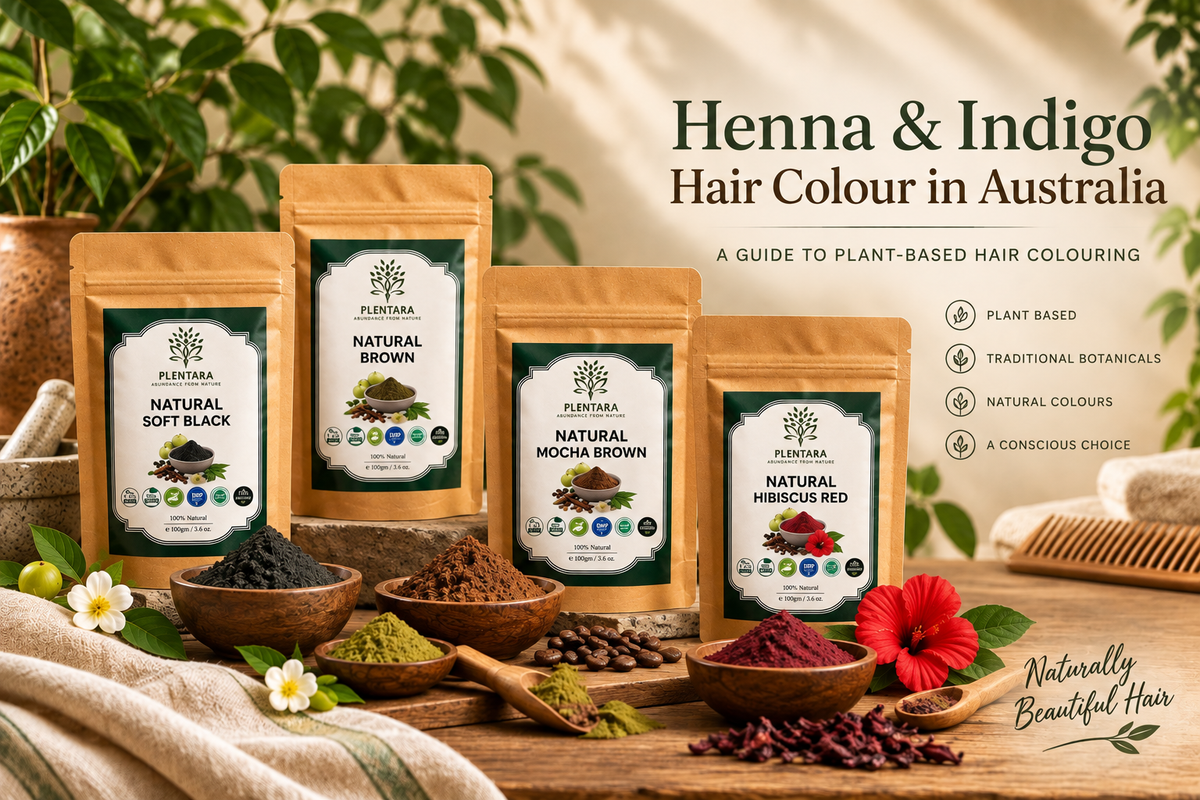
Henna & Indigo Hair Colour in Australia: A Guide to Plant-Based Hair Colouring
Choosing a hair colour can involve more than simply picking a shade from a colour chart. Some people are exploring plant-based hair-colouring options such as henna and indigo, particularly those looking for botanical ingredients and traditional hair-colouring practices.
Henna and indigo have been used in different traditional practices for generations and are available today in powder-based hair-colouring products.
But what exactly is the difference between henna and indigo? What colours can they produce? Can they be used together? And what should you look for when buying henna or indigo hair colour in Australia?
This guide explores the basics of henna and indigo hair colouring, how the two are different, how colour results can vary, and what to consider when choosing a hair-colouring product.
What Is Henna Hair Colour?
Henna is a plant-derived colouring ingredient traditionally associated with the Lawsonia inermis plant.
The leaves of the plant contain a natural colouring compound that can bind to hair and produce warm colour tones.
Depending on the starting hair colour and the formulation used, henna can create shades ranging from warm copper and reddish tones to deeper auburn-like results.
The final colour isn't identical for everyone.
Factors such as:
- Your natural hair colour
- Existing grey hair
- Previous hair colouring
- Hair condition
- Application method
- Processing time
- Product formulation
can all influence the final appearance.
This is why henna should be viewed as a hair-colouring process rather than a guaranteed single shade.
Why Do People Choose Henna Hair Colour?
Henna can appeal to people who are interested in plant-based hair-colouring traditions.
It can also be supplied as a powder, allowing it to be prepared before application according to the product's instructions.
For consumers comparing henna hair colour in Australia, useful things to check include the ingredient list, botanical identity, product directions and supplier information.
Australian cosmetic and therapeutic-goods guidance from the TGA
What Is Indigo Hair Colour?
Indigo hair colour is associated with the Indigofera tinctoria plant.
Like henna, indigo can be prepared as a powder and used as a plant-derived hair-colouring ingredient.
Indigo is generally associated with darker and cooler colour directions than henna.
Depending on the hair's starting colour and the application process, indigo may contribute to darker brown or blue-black-looking results.
The result can vary considerably between individuals, so following the specific product instructions is important.
Henna vs Indigo: What's the Difference?
Although henna and indigo are both plant-derived colouring ingredients, they aren't the same thing.
| Feature | Henna | Indigo |
|---|---|---|
| Botanical source | Lawsonia inermis | Indigofera tinctoria |
| Typical colour direction | Warm red/copper tones | Darker, cooler tones |
| Common format | Powder | Powder |
| Can be used alone? | Yes | Yes |
| Can be used with the other? | Yes | Yes |
| Final colour | Depends on starting hair and application | Depends on starting hair and application |
The important point is that neither ingredient produces exactly the same result on every head of hair.
Starting hair colour and the application process have a major influence on the outcome.
Can Henna and Indigo Be Used Together?
Yes, henna and indigo can be used as part of a combined hair-colouring process.
They are sometimes used together or in separate stages to create darker shades than henna alone may provide.
For example, someone looking for a deeper brown result may use a henna-and-indigo process rather than henna by itself.
However, the exact result depends on several variables.
Colour can be influenced by:
- Natural hair colour
- Percentage of grey hair
- Existing artificial colour
- Ratio of henna to indigo
- Application technique
- Processing time
- Individual hair characteristics
Because of this, colour charts should be treated as guides rather than guarantees.
If you're trying a product for the first time, follow the manufacturer's instructions carefully.
Henna and Indigo for Grey Hair
Grey hair can behave differently from naturally pigmented hair because it contains less or no natural melanin.
As a result, henna and indigo may produce a more noticeable colour difference on grey strands.
Henna can create warm tones on lighter or grey hair, while indigo may contribute darker tones depending on how it is used.
For people with a significant amount of grey hair, the final result can therefore depend heavily on the application process.
Before colouring grey hair, consider:
- Your percentage of grey hair
- Your existing hair colour
- Previous chemical colouring
- The desired colour direction
- The product's recommended application method
A strand test can be particularly useful when trying a new hair-colouring product because it gives you an indication of how the colour may develop on your own hair.
What Colour Does Henna Give Hair?
Henna is generally associated with warm red, copper and reddish-brown tones.
However, the visible result can vary.
For example, henna applied to light or grey hair may appear considerably more vibrant than the same product applied to dark brown hair.
| Starting hair | Possible henna appearance |
|---|---|
| Light hair | More visible warm/copper tones |
| Grey hair | Noticeable warm or reddish tones |
| Light brown | Warm reddish/brown tones |
| Dark brown | More subtle warm tones |
| Black | Often a more subtle visible change |
These are general colour directions, not guaranteed results.
What Colour Does Indigo Give Hair?
Indigo is generally associated with darker colour results.
Its appearance can range from darker brown directions to blue-black-looking tones depending on how it is applied and what the starting hair colour is.
The same product can therefore look quite different on different people.
This is one reason why product instructions and strand testing are useful when experimenting with plant-based hair colour.
Henna + Indigo: What Colour Can You Expect?
Combining henna and indigo can create a broader range of darker colour directions.
A simplified guide might look like this:
| Starting hair | Henna | Indigo | Henna + Indigo |
|---|---|---|---|
| Light | Warm/copper | Darker/cooler | Brown/deeper tones |
| Brown | Warm tones | Darker tones | Deeper brown tones |
| Grey | Warm/red tones | Variable | Depends strongly on process |
| Dark brown | Subtle warmth | Darker direction | Potentially deeper tones |
| Black | Limited visible change | Variable | Usually limited visible change |
The actual result can differ from these general descriptions.
Your hair's starting colour is one of the biggest factors in determining the final appearance.
How to Use Henna Hair Colour
Powder-based henna products generally need to be prepared before application.
However, preparation instructions can differ between products, so always follow the directions supplied with the specific product you're using.
A general process may involve:
1. Prepare the product
Mix the powder according to the manufacturer's instructions.
2. Prepare your hair
Make sure your hair is prepared according to the product directions.
3. Apply evenly
Work through the hair carefully to achieve even coverage.
4. Allow the recommended processing time
Leave the product on for the amount of time specified by the manufacturer.
5. Rinse thoroughly
Rinse according to the product instructions.
6. Allow the colour to develop
Some plant-based colour processes can continue developing after application, so don't judge the final shade immediately.
Always prioritise the instructions supplied with your particular product.
How to Use Indigo Hair Colour
Indigo products also require preparation and application according to their specific instructions.
Because indigo can behave differently from henna, don't automatically assume that the preparation method for one product applies to another.
Before application:
- Read the complete directions
- Check the ingredient list
- Follow the recommended mixing instructions
- Observe the recommended processing time
- Perform a strand test if appropriate
- Follow the manufacturer's rinsing instructions
If you're combining henna and indigo, use the method and ratios recommended for the particular product.
What Should You Look for When Buying Henna or Indigo Hair Colour in Australia?
With many hair-colouring products available online, reading the product information is an important part of choosing one.
1. Check the ingredient list
Look for clear ingredient information and botanical names where provided.
For example:
Henna: Lawsonia inermis
Indigo: Indigofera tinctoria
Understanding what's actually in a product helps you compare products more accurately.
2. Check the directions
Look for clear instructions covering:
- Preparation
- Application
- Processing time
- Rinsing
- Storage
3. Check the product quantity
Compare pack sizes rather than judging products solely by the price of the package.
4. Check the intended use
Make sure the product is specifically intended for hair colouring and follow its stated use.
5. Look at supplier information
A clearly identified supplier provides useful information for consumers who want to understand where their product comes from.
6. Don't assume "natural" means risk-free
Plant-derived ingredients can still cause unwanted reactions in some individuals.
Always read the product information and follow any recommended precautions.
Henna vs Conventional Hair Dye
Henna and indigo are often discussed as alternatives to conventional hair dyes, but they work differently and shouldn't simply be treated as identical products.
| Henna / Indigo | Conventional hair colour |
|---|---|
| Plant-derived colouring ingredients | Can use synthetic colouring ingredients |
| Often supplied as powders | Commonly supplied as creams, gels or other formulations |
| Colour depends heavily on starting hair | Formulation designed around specific colour results |
| Often associated with warm/dark botanical colour directions | Broad range of formulated shades |
| Application can take longer depending on product | Processing times vary by product |
Neither category should automatically be described as universally better.
The appropriate choice depends on factors such as your desired colour, application preferences, ingredients and the particular product formulation.
Are Henna and Indigo Hair Colours Safe?
There isn't one blanket answer that applies to every henna or indigo product.
Safety depends on the specific formulation, ingredients, intended use and individual circumstances.
This is particularly important because products sold as "henna" or "natural hair colour" can contain different ingredients.
Before using a hair-colouring product:
- Read the complete ingredient list
- Follow the manufacturer's directions
- Follow any recommended patch or strand testing instructions
- Avoid using the product outside its intended purpose
- Stop use if you experience an adverse reaction and seek appropriate advice
It's also worth remembering that plant-based doesn't automatically mean suitable for everyone.
Australian Considerations for Hair Colour Products
If you're shopping for henna hair colour in Australia, it's useful to understand how products can be regulated.
The Australian Therapeutic Goods Administration (TGA) explains that whether a product is a cosmetic or therapeutic good depends on factors including its ingredients, claims, presentation and intended purpose.
Some cosmetic products fall outside therapeutic-goods regulation when they meet the relevant criteria.
Hair dyes and hair-colouring products can fall within the cosmetic framework when their purpose and claims remain cosmetic.
TGA: Is my product a cosmetic or therapeutic good?
For businesses selling products in Australia, this distinction is particularly important when writing product descriptions and advertising copy.
Claims about changing hair colour or appearance are different from claims suggesting that a product treats, prevents or manages a medical condition.
For cosmetic products, keeping product descriptions accurate and consistent with their intended cosmetic use is therefore important.
Where Can You Buy Henna and Indigo Hair Colour in Australia?
When shopping online, look for products that provide clear information about:
- Ingredients
- Botanical names
- Product quantity
- Directions
- Intended use
- Storage
- Supplier information
At Plentara, our Hair Colour collection brings together plant-based hair-colouring products for customers exploring botanical hair-care options.
👉 Explore Plentara Hair Colour products
You can also link each relevant product individually here:
Frequently Asked Questions
Is henna hair colour available in Australia?
Yes. Henna-based hair-colouring products are available through Australian retailers and online stores. When choosing one, check the ingredient list, directions and supplier information.
What colour does henna give hair?
Henna is generally associated with warm red, copper and reddish-brown tones. The final appearance depends on your starting hair colour, the product formulation and the application process.
What colour does indigo give hair?
Indigo is generally associated with darker, cooler colour directions and can contribute to dark brown or blue-black-looking results depending on the starting hair and application process.
Can henna and indigo be used together?
Yes. Henna and indigo can be used together or as part of a multi-step colouring process. The final colour depends on factors such as the starting hair colour, proportions and application method.
Can henna colour grey hair?
Henna can produce visible warm or reddish tones on grey hair. The result can vary depending on the percentage of grey hair and the colouring process used.
How long does henna hair colour last?
The longevity of henna-based colour varies depending on the product, hair type, washing routine, starting hair colour and other factors. Follow the specific product information for guidance.
Can I use henna after conventional hair dye?
This depends on the products involved and the condition of the hair. Always check the manufacturer's instructions and consider performing a strand test before applying a new colouring product over previously coloured hair.
Is henna better than conventional hair dye?
There isn't one option that is universally better. Henna and conventional hair dyes use different approaches to colouring hair, and the appropriate choice depends on the individual's desired colour, ingredients and application preferences.
Is plant-based hair colour completely chemical-free?
"Plant-based" and "chemical-free" should not be treated as interchangeable terms. Plant-derived products still contain chemical compounds, and formulations can vary. Check the complete ingredient list rather than relying only on marketing terminology.
Final Thoughts
Henna and indigo offer interesting plant-based approaches to hair colouring, with each ingredient producing different colour directions.
Henna is generally associated with warm red and copper tones, while indigo can contribute darker, cooler tones. When used together, they can provide additional colour possibilities.
The most important thing to remember is that hair colour results aren't one-size-fits-all.
Your starting hair colour, grey coverage, previous colouring, product formulation and application method can all influence the final result.
If you're exploring henna and indigo hair colour in Australia, take the time to check the ingredients, read the instructions and choose products with clear information about their intended use.
🌿 Explore Plant-Based Hair Colour with Plentara
Discover Plentara's range of hair-colouring and botanical hair-care products and find the format that fits your routine.
[Explore Plentara Hair Colour → Herbal Hair Colours by Plentara]